Max and Duke’s Evolving Companionship
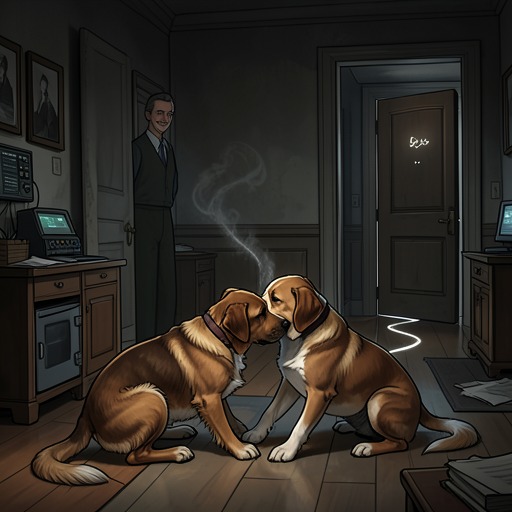
A Dog's JourneyMax and Duke’s Evolving Companionship grows from wary competition into an affectionate bond tempered by Max’s protective judgment. Their differences remain visible throughout: Duke is large, energetic, and easily distracted, while Max prides himself on staying close to CJ and intervening when another animal—or Duke himself—needs to be kept safe.
An Uneasy Welcome
When CJ brings Max home, she introduces him to Duke as the dog who will live with them. Max responds to the huge dog with a warning growl, ready to defend his place beside CJ; Duke’s lowered ears and wagging, stiff tail give their first encounter a less hostile cast than Max expects. CJ keeps Max in her arms rather than putting him down, and Duke does not challenge him. The scene establishes an imbalance that will define their early interactions: Max is physically small but assumes responsibility for deciding what is safe, while Duke’s size and reactions make him seem difficult to manage.
Max’s confidence meets a different test in the bedroom. When Sneakers scratches him across the face, Duke licks him, offering comfort after Max’s attempt to approach the cat ends in a yelp and a fall from the bed. Max does not immediately recast Duke as a close companion, but Duke’s response is gentle rather than competitive. Their household relationship begins to take shape through such practical encounters: Max watches the other animals, and Duke’s behavior supplies both a source of disruption and, at times, reassurance.
Different Ways of Being a Dog
On walks, Max measures Duke against his own idea of good companionship. He thinks dogs belong beside people, unlike cats, whom he imagines as walking by themselves. Duke, pulling this way and that after smells, repeatedly tugs CJ off balance and gets in Max’s way. Max, by contrast, trots at her feet without needing to be called back. He is pleased that CJ has another dog after his life as Molly, but interprets their reunion as a return to his own authority: in his view, Duke does not know how to behave on a walk, so Max must be the one in charge.
That judgment coexists with growing tolerance. Max observes that Duke is submissive when they play, rolling onto his back and allowing Max to climb on his neck and chew on his face. The physical contrast that makes Duke cumbersome on a leash becomes an invitation to roughhousing at home. Max can be irritated when Duke’s large head knocks him over, yet their play gives him a way to approach the larger dog without surrendering his sense of seniority.
At the dog park, their different bodies and temperaments briefly work together. Freed from their leashes, Max runs quickly enough to leave Duke and Sally behind; the chase with the other dogs delights him. When Beevis corners him, Duke charges into the encounter, and his towering presence makes Beevis less hostile. Max then runs to CJ and settles proudly in her lap. The episode does not erase Max’s conviction that he is the more competent dog, but it shows Duke’s size serving a protective purpose that Max cannot supply alone.
Shared Vigilance at Home
Their companionship becomes most consequential when CJ is away and Duke repeatedly pursues Sneakers. The first time Max hears Sneakers moaning beneath the bed, he finds Duke trying to force his way under it, lifting the bed with his head. Sneakers is pressed against the wall, frightened. Max barks, lunges, and clicks his teeth at Duke; when that draws Duke’s attention, Max drives him out of the room and checks on Sneakers without crawling under the bed himself. His intervention is not simply a contest between the two dogs: Max recognizes Sneakers’s fear and leaves her space rather than making her more anxious.
The incident becomes a daily pattern. As soon as CJ closes the door, Sneakers darts for her hiding place and Duke gallops after her, sometimes crashing into walls as he takes corners too quickly. Max races after them, dives beneath the bed, and faces Duke with exposed teeth and a growl. Duke moans in frustration and sometimes barks in the cramped space, but eventually gives up and returns to the living room. Max’s resistance is repeated, not a single correction: he positions himself between Duke and the frightened cat until the pursuit stops, even though Duke is much larger.
Later, CJ puts Sneakers in a crate after their walk. Duke approaches, snorting, and Sneakers retreats to the far end. This change in the household’s arrangement makes the animal relationships less a matter of Max’s authority over Duke than of the conditions CJ sets to manage them. Max’s protective impulse remains central, but the crate scene shows CJ directly intervening in the recurring conflict.
Reunion and a Change in Restraint
On one of CJ’s bad days, Max hears someone at the front door and is astonished when Trent arrives with Duke. Duke bounds into the room, and Max greets him with unmistakable enthusiasm: he rises onto his hind legs, puts his front paws around Duke’s head, and licks him. Duke licks Max in return, shaking and moaning with excitement before dropping onto his back so Max can climb on him. Their reunion turns the old pattern of rough play into an open display of mutual affection.
The excitement changes when Duke jumps onto CJ’s bed. CJ gasps with pain; Duke knocks over the lamp and keeps leaping around the room, while CJ and Trent become angry. Max then bites at Duke’s heels until Duke retreats to the floor, ears back. Max recognizes that CJ needs quiet, not the boisterous play Duke enjoys. The moment marks a change in what Max understands protection to require: earlier, he mainly saw himself as the dog in charge; here, he uses that authority to stop a friend whose exuberance is causing harm. Duke’s affection for Max is not in doubt, but their bond can no longer be measured by play alone. It also depends on Max’s ability to curb that play when CJ needs calm and stillness.